
More Book Recommendations
What to Learn About Writing from My List (Free Post)

Before we get to my book list…
What is more important than freedom of expression? Whether it’s a poem, a play, a novel, music, or art, find an avenue for your interior life! Storytelling Lab is home to creatives like Alicky Sussman. Alicky didn’t know what a graphic novel was; now she’s created one. She was featured in The Times of London Sunday Magazine.
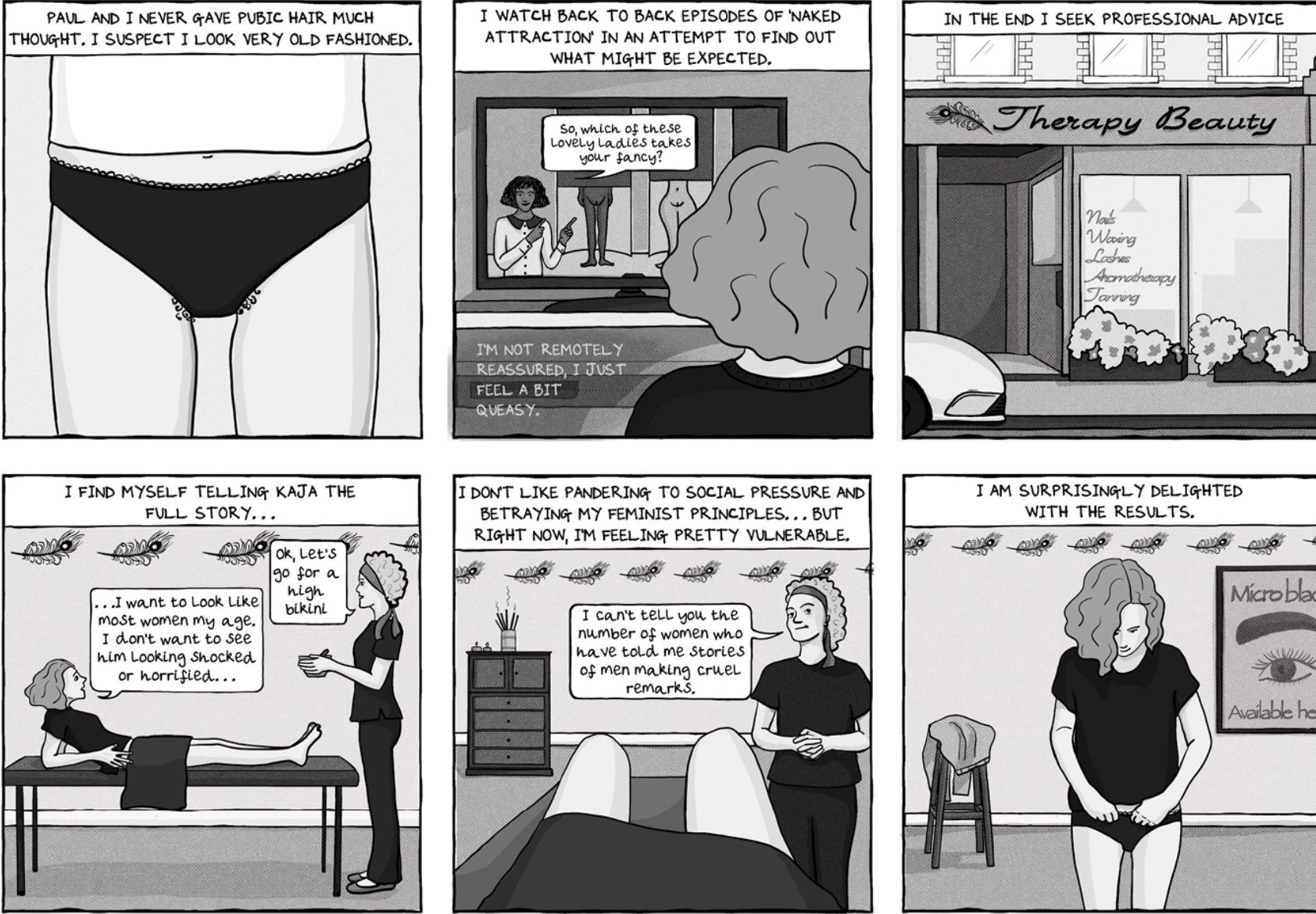
(You can scroll past the plug for Storytelling Lab and go directly to the book recommendations or keep reading)
Finally, I want to share this email because it embodies what Storytelling Lab is about.
Dear Bonnie: (copied as written)
I just wanted to drop you a little thank you message for all the fun and creative energy that you so thoughtful put into your writing course. I truly enjoyed my time with you and our group.
Not knowing what to expect when signing up, I was really excited and challenged by the imaginative ways you had us as a group reflect and respond to the weekly themes of the course. You really made us think outside the box.
Although it went by too quickly, this was just the kick up the arse I needed to get myself focused in life and rediscover what excites and engages me.
While your class was, on the surface, fun and informal, it had the depth of content, with interesting and stimulating topics. This has really energized me towards pursuing further study and learn and grow.
I’m both excited and a little shit scared to be jumping back into the world of academia after the best part of 15 years. Architecture and history have always been a great interest of mine and were my area of work back in the UK, so returning to this and immersing myself deeper into the subject matter will be enjoyable and rewarding. I hope to work towards a Ph.D., something I would have never imagined for myself even just a few months back before your course and I would like you to know that you have been instrumental in my decision to do so.
I will, of course, keep writing for fun in between the many assignments and long hours reading and researching, which lie ahead.
So, to cut a long story short, I want to say a big thank you.
Best wishes
Steve
MY LIST
NOT ALL READING IS CREATED EQUAL. I don't mean the quality of the prose, or story, or characters' relatability. I mean what you read and when you read it. One thing we fail to take into consideration is the state of mind we're in when we watch. In the early days of this newsletter, I did a Substack called "The When of It," on this subject as it relates to film and television. The point is that the frame of mind we bring to what we watch (or read) can't be separated from our experience.
In films, acting, cinematography, score, or other elements mask flaws in a script. Similarly, a great script can mask deficiencies in direction, etc. When we read, there's nothing between us and words. Those words might be open to interpretation, but the visuals occur through imagination. We chose them. We're the director, actor, and lighting designer, not to mention the collaborative process of writing a film or television.
The first time I had a movie I made was for a relatively small-budget television movie. When I arrived on set, the first thing that struck me was how many people my script employed. Quite literally hundreds. It's not just about me. There's something very gratifying about that aspect of the collaborative process.
Books, conversely, are between the reader, the words on the and our imagination. There are no car chases, no gorgeous wardrobes, dreamy locations, or other distractions. The story lives and dies by the writer’s words.
PROPHET SONG, Paul Lynch. This book won the 2023 Booker for good reason. It's unforgettable. The propulsive writing keeps you in the moment, terrified to get one step ahead. While set in Dublin, it could be the US or a long list of Western and non-Western countries. It tells the story of a woman whose husband, a teacher, goes missing after a protest march. While a dystopian novel, it's terrifyingly present and prescient. Reading it, it felt like real life unfolding before me. I could barely breathe reading this novel. Although there's no violence, it's not a book for the faint of heart.
One of the marvels of this book is that it takes place in Ireland, yet it's not about "The Troubles." It is clever to use a country that conjures up the specific social and political dynamic and ignores it. Instead, Dublin becomes universal, home to all of us. At the heart of the story is a wife and mother.
Lesson: To tell a story about political strife, you must subvert politics. Readers don't want to be told how and what to think. How you craft your story will lead them in the direction you want them to go. We invest in Ellish, the wife, mother, and daughter at the heart of the narrative. Seeing the story unfold through her eyes avoids political rhetoric. Instead, it enables us to feel and experience the horror of the situation. Lynch also did something clever stylistically that dictates the pace of the storytelling. He veered away from convention and eschewed the use of paragraphs. It's a smart device that works brilliantly in this narrative. It sets the pacing and provides a sense of urgency, creating unrelenting tension.
RIVER EAST, RIVER WEST by Aube Rey Lescure. Part coming of age, part family and social drama, it tells the story of Alva, a mixed-race teenager in Shanghai and her new stepfather, Lu Fang, an older Chinese businessman, interweaving their two disparate stories. The story unfolds in two periods: in 1985 in the seaside city of Qingdao and in Shanghai in 2007. The common thread is that we meet Sloan, Alva's mother, as she's about to marry Lu Fang. This novel marks the author's debut and was short-listed for the 2024 Women's Prize. Rey Lescure dissects the real and imagined binaries of life – city/country, poverty/wealth, China/America, flash/grit, cultural identity, etc. to show the hardship of finding our place in society.
Lesson: The story has a terrific inciting incident. The mother and daughter "you and me against the world" bond tears apart when the mother decides to remarry. Any time you take a twosome and triangulate it, there will be conflict. A strong inciting incident is the propeller for jumpstarting your story. The other clever takeaway from the novel is point of view. Rey Lescure effectively presents us with two contrasting lenses through which to experience the world of the story. It enables us to empathize with the outsider's point of view – the new husband.
LOVED AND MISSED by Susie Boyt. Renowned author Hilary Mantel once wrote an essay that said, "There is a hierarchy of subject matter." I agree. If a woman writes about motherhood or “domestic” issues, it's considered less important than if she writes about war. I admit to some hierarchy thinking, but this book proved me wrong. Or maybe the book proved my worst fear: how parents never give up longing for a connection to their children. This is a visceral read, meaning you will feel an ache in the pit of your stomach until you finish the book, at which time a new ache will reveal itself. It tells the story of a mother who temporarily assumes guardianship over her grandchild when her daughter, a drug addict, loses custody.
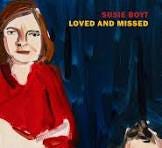
LESSON. There’s a lot of drama in hope and longing. This story uses what I call triangulation. First, there’s a two-some, and then a third person enters the story. Once you have three people, the chances for conflict increase ten-fold, even among the closest friends. My two friends and I went out to dinner every Sunday night. We ended putting the names of restaurants into a hat and drawing a new one each week, it could never be two against one. Another benefit of triangles is that they’re not static. What happens when the twosome shifts? If your main character wants something out of their control, do they give it up? Or do they continue to pursue it regardless of the consequences?
HOUSE OF DOORS by Tang Twan Eng. The acclaimed novel appeared on many prestigious best lists and was long-listed for the Booker. As a teenager, I wasn't much of a reader, but I loved W. Somerset Maugham. I was attracted to this novel because one of the characters is inspired by and loosely based on him. The writing is gorgeous and atmospheric. You feel the dank, oppressive air in the claustrophobic narrow passageways weaving through the streets. The story encompasses truth and fiction, weaving it into an engrossing read. It is set in British colonial Malaya in 1921, where W. Somerset Maugham and other ex-pats took up residence. Maugham, desperate for a new idea, is mining the lives of those around him when he stumbles upon a story of blackmail that grabs his attention. Twan Eng takes that idea and runs with it, creating his own version of the same narrative. It's a story within a story.
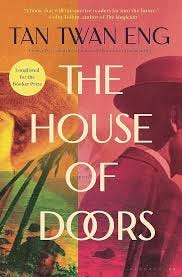
Lesson: You don't need glamorous or exotic locations to tell a story. What matters is your imagination. Twan Eng was first introduced to Maugham's writing through his short story "The Letter" (later adapted as a film starring Betty Davis). Intrigued by the setting, he wanted to tell a story of colonialism, power dynamics, and cultural clashes but had yet to find the right vehicle. Some years later, Twan Eng discovered that an actual murder case inspired Maugham's short story. He decided to dig into the details of that case. The novel grew out of his research. Pay attention to what speaks to you. Get specific. What engages your curiosity? Take a deep dive into your subject. Research is a fantastical motivational tool. It'll fire up your imagination and stir up new ideas. Do research even when you think you know everything you know about your subject. The use of triangulation works brilliantly here, as well.
ALL FOURS by Miranda July. I read this the first week before receiving the massive attention it garnered. July's work always receives attention and inspires conversation. She's not everyone's taste, which is, in my opinion, a compliment. I'm also bewildered why there's so much discussion about it being a "peri-menopausal book" and meant to be universal. That condition is the motivation for her character's behavior and decisions. Women endure a myriad of hormonal and emotional changes throughout their lives. I resent when hormones become an excuse for our behavior. It's something men have used against women for centuries. Now, July uses it as a pretext for her character's behavior.
The writing is devoid of grace or style. Her descriptions are reserved for sex. July basks in sound effects and graphic minutiae of delivering and receiving oral, anal, and vaginal sex. Details go on page after page and feel almost clinical. Ultimately, the sex becomes mundane and, frankly, a turn-off.
I found myself judging this character a lot. I don’t want to sound like a Karen or make my reactions to the book about my age, but this was not for me. As someone who passed on having kids because I know nobody can have it "all," I don't understand why this character feels she should be an exception. I took the decision not to have children seriously. It does mean sacrifices. Sacrifices I wasn't prepared to make. But this character believes she's entitled to everything she wants regardless of other choices. Her child is superfluous in her life. Even her choice of not assigning gender to her child feels like pandering to prove she's hipper and politically correct than the rest of us.
Lesson: While this book is labeled auto-fiction, I’d argue that all fiction meets that definition. The story is coming from you. It's part of you. But when you're using yourself as a character, you lean into the fiction part of the storytelling. We can't be objective about ourselves. What is about us and our struggle that connects us to other people? Use your experience and emotions to help connect you to your character. But your imagination should drive the story. Think outside your own experience. I always do deep dives into subjects before I write, even if I'm writing about what I know. It's part of the fun of developing characters and ideas. If you want to write about yourself and your experiences, write a memoir.
Thank you reading! Happy Holidays.
Thanks for this - it has made me want to read Paul Lynch more - though I may be too faint-hearted - but definitely Susie Boyt's Loved and Missed. Love your insights into triangulation in a story (and friendships generally).